vulnerability as drawing.
Words by Artist and Curator Lisa Pang.
DRAWSpace Gallery, Sydney. 2025.
The first days of a new year are a time of vulnerability. A calendrical cycling prompting a mood of reflection, it is ostensibly a season marked by the freshness of resolve and renewal. Yet the mist of public postings and social consciousness can also invite success comparisons to others and a weighing of achievements. It may also become a time to feel the heaviness and weight of a past year, to measure disappointment among the success, and to find bewilderment beside the goals and exclamations.
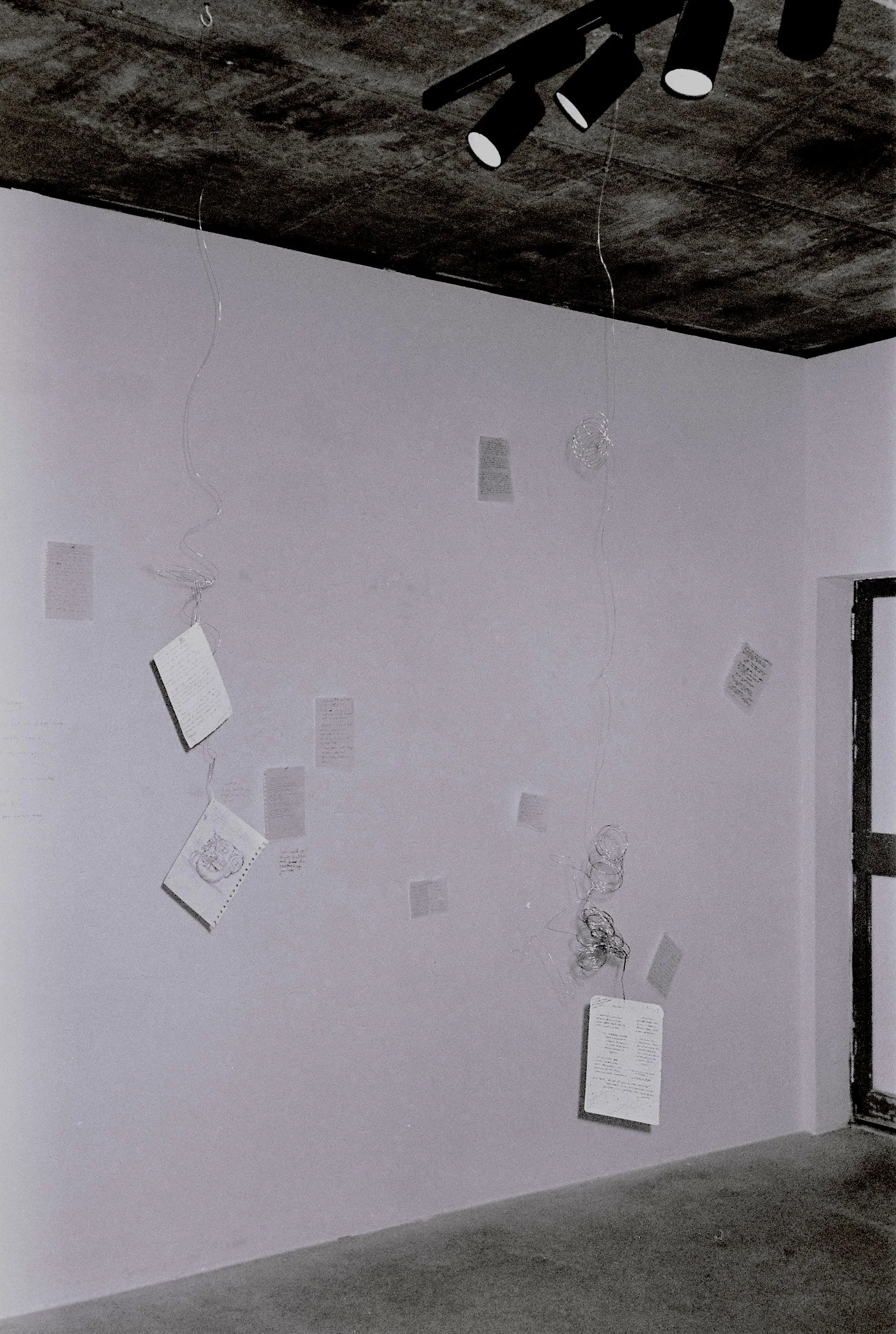
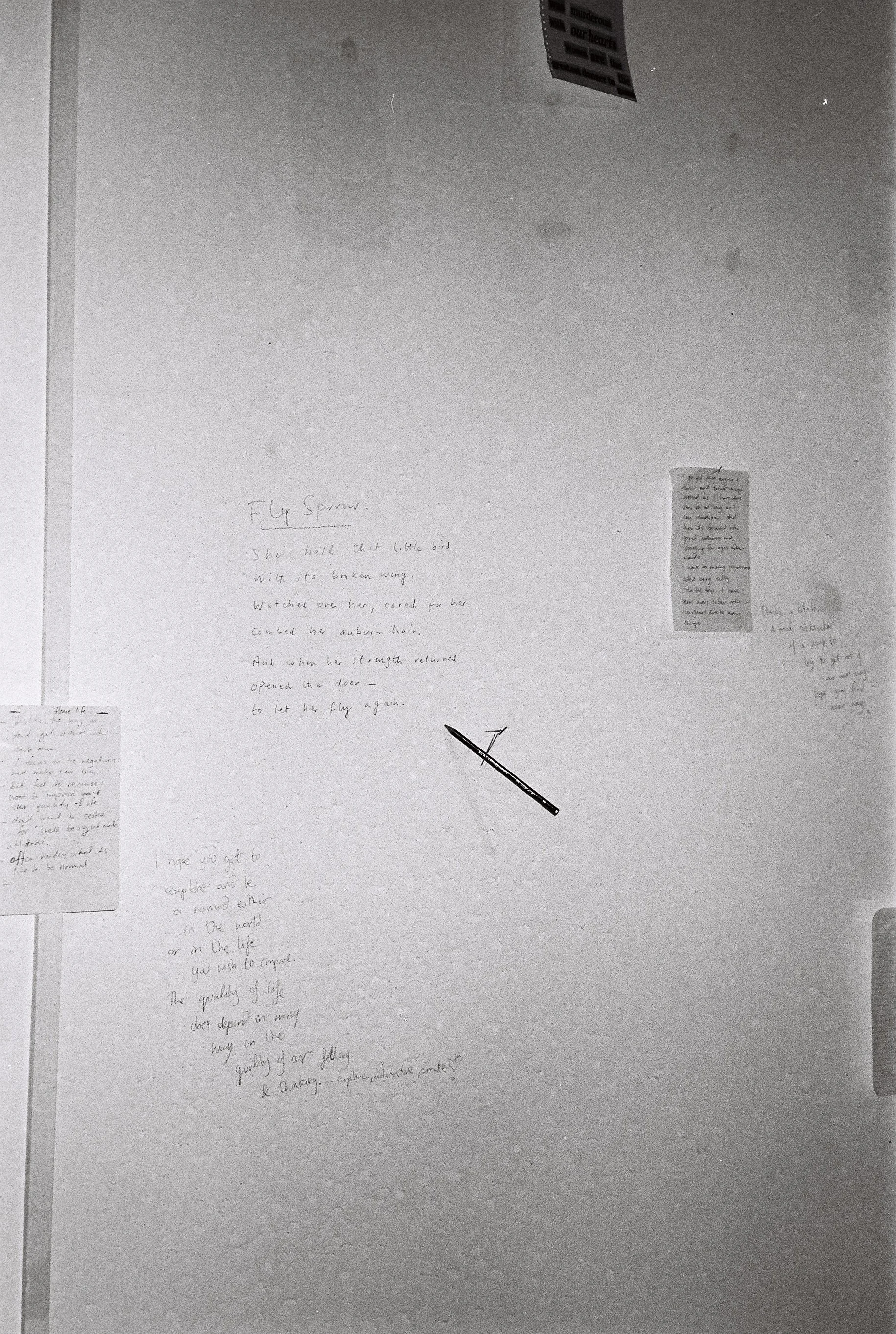
The Vulnerability Projekt at DRAW Space is a tender, tentative exploration of vulnerability, shared. The Projekt started in London (2022) and continues to be nurtured by Liliane Spratt. It arose out of a time of isolation and yearning while far away, and now, like Lili, is home for a visit. Placing intimate revelations of vulnerability at its core, she describes it as an ever-evolving installation of journal entries, a collection of pencilled private thoughts, feelings and observations.
There are so many qualities within these notations that align to our contemporary conception of what drawing is. What is handwriting but a collection of marks made on a paper, using simple and familiar tools to hand (pen or pencil). Marks as handwriting may be forensically unique to each author but here in this Projekt, anonymity is preserved in favour of a collective fragility. Writing is a composition of line and form, direct from the hand, on a chosen substrate. Materials and method are direct, accessible, part of a daily rhythm. We are all artisans of our own fluency. While recognisable and legible, like a drawing these vulnerabilities are intentionally made, even if formed by hesitancy and given over privately. They disclose things.
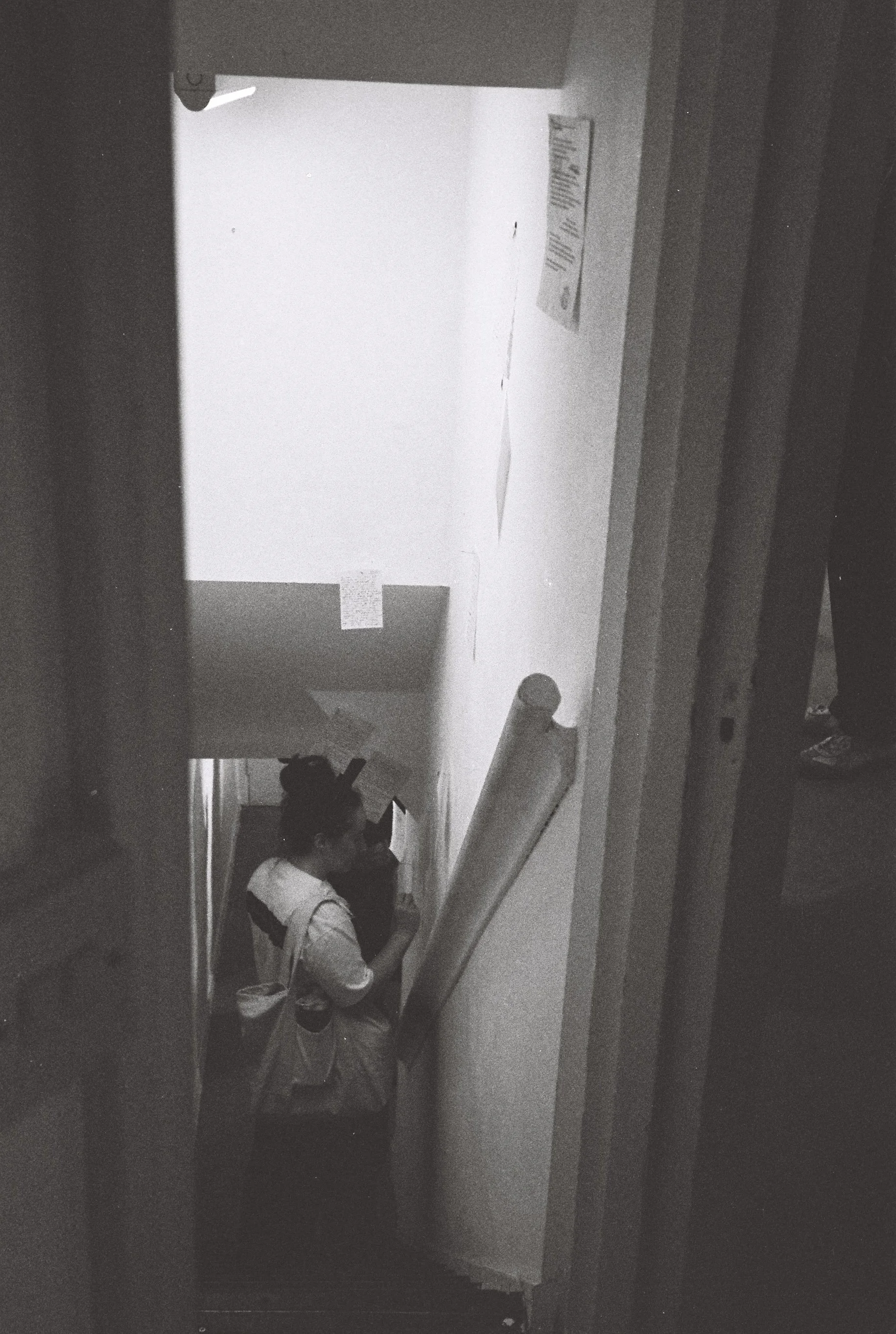
These vulnerabilities as confessional missives are manifested in the many fluttering sheets of paper, various shades of white, pinned to walls. Yes, they are a collection of writings; notes, thoughts, ideas, lyrics, hopes, outbursts. Some are tidy, neatly and carefully documenting thoughts. Diagrams appear. Some digress to drawing. Most are on ordinary lined notepaper. Others are looser, the loops of writing as expressive as the legible emotion told. A napkin does for a writing surface. Words are crossed out. Blanks of white under, over and around say as much as the lines of script. Paper is folded, crumpled, stained, burned. Reading through the Projekt, as we are invited to do, Lili’s description of them as entries cuts to the interiority of a journal. Entries are the many small steps, half-steps, hesitations and false starts while on a pathway, when destination and finality are not fully known.
Drawing is often said to be a way of thinking and these notes do that. They communicate something not fully formed, a way of figuring meaning. Made not with the primary intention of being read, seen or displayed but as a way of working things out through the familiar action of marking paper. They are eminently erasable, tear-able, crumple-able, changeable, mutable.
At Draw Space we have been working to engage with a broad definition of what contemporary drawing is and can be. Without looking to contain drawing to a singular definition[i], our shows have expounded drawing as a vital, visual language to express ideas and to try to understand our contemporary moment. The Vulnerability Projekt set out simply to collect vulnerabilities in a time of personal and social isolation. As an expanding collection of works (marks) on paper it has become a collective digression on alienation and connection. A drawing in progress.
[i] Sometimes however definitions are helpful.
Drawing is a primary means of expression, and an integral means of creative development and ideation, reflection and information gathering. (Drawing Projects, UK)
The (drawing) medium (is) primary, dynamic, and relevant to contemporary culture, the future of art, and creative thought. (The Drawing Center, New York)